

the artist vs the machine
notes from Puglia on meaning, craft, and stepping off the treadmill

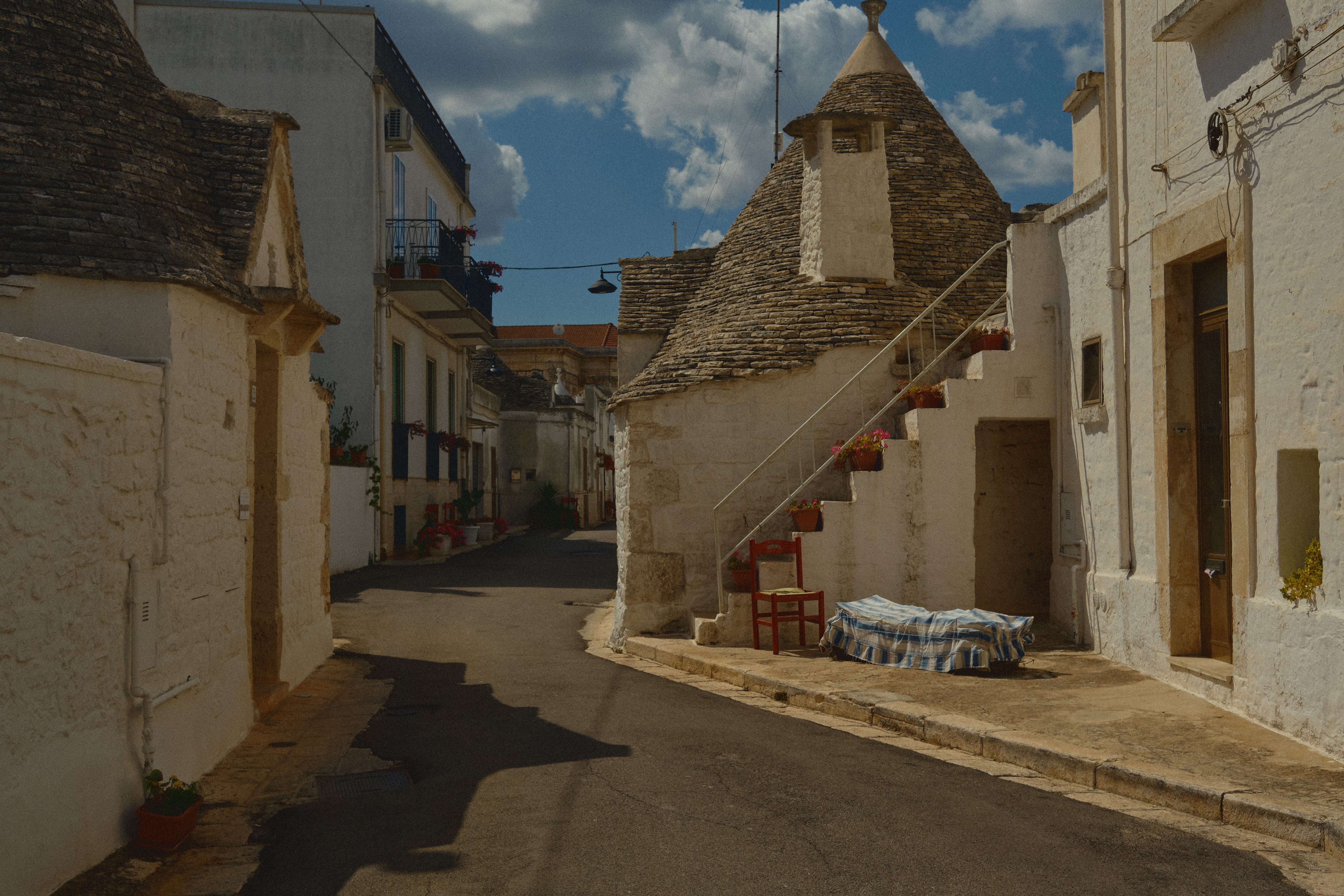
This morning I woke up to church bells. Actual bronze bells ringing across right in a little chapel next door, the same bells that have marked time here for longer than my existence.
I’m trying to figure out if I’ve made a mistake.
Not about moving to Puglia—I mean the other thing. The decision to step away from what was working. To close the door on a profitable direction, that gave me this freedom in the first place.
Was that wisdom or just another form of restlessness? Another way of running?
I keep coming back to this line from Paul Kingsnorth:
“The Machine appeared in the distance, singing to itself of money. Its song was the web they were caught in, men and women together.”
And I wonder… Am I caught in that web, or am I trying to escape it?
Let me tell you what it’s like here.
The light in December comes in low and golden through the olive groves. These trees—some of them are five, six hundred years old. They’ve survived through plagues and wars and the entire history of capitalism, and they’re still here, still producing. There’s something quietly devastating about that kind of endurance.
And there’s this thing happening—this strange, uncomfortable settling. Like my nervous system is recalibrating to a different frequency. Slower. Thicker. More... Like the old days.
The woman who runs the small alimentari down the road knows everyone’s business. She’ll spend fifteen minutes telling you about her grandson while you’re trying to buy eggs. There’s no self-checkout option. No way to optimize this transaction. You just stand there and be human with another human for a while.
I’m starting to understand something I couldn’t have articulated before.
Here’s what Kingsnorth traces in his book, and what’s been sitting heavy with me: Western culture underwent this massive shift in where we look for meaning.
Meaning used to live outside you. In your village, your church, your craft guild, the land you worked. You were part of a story that started before you were born and would continue after you died. Your role was already there, waiting. You just had to step into it.
Then something changed. Meaning migrated inward. Now it’s all about your authentic self, your inner truth, your psychological wellbeing. The ultimate authority isn’t tradition or community or God anymore—it’s your own experience.
And of course, this was partly liberation. The old structures could be crushing. Suffocating. I’m not trying to romanticize some agrarian past where everyone knew their place and nobody questioned anything.
But I’m noticing something uncomfortable. When meaning is purely internal and psychological, it gets... slippery. Anxious. Untethered.
Because if the only authority is your inner experience, and your inner experience is supposed to be the source of meaning, and you’re not feeling particularly meaningful... then what?
The culture has an answer ready: transform yourself.
Go deeper. Do more work. Find a better framework. Hire a better coach. Launch your truer self.
The promise was always — you’re not enough yet, but through this work, you can become enough. And once you’re enough, you can help others become enough too.
An endless cycle of transformation. No ground underneath.
The English term “inner work” that emerged still has the aftertaste of puritan or calvinist work ethic culture. In that it subtly frames self-knowledge and healing as a productivity project rather than a relational and contemplative process.
The language of “work” can smuggle in expectations of linear progress, measurable outcomes, and moral worth tied to effort. It risks turning introspection into another arena for performance and optimization, instead of allowing for rest, play, grief, and non-instrumental presence.
Perhaps “inner practice,” “inner attention,” or “inner relating,” are better suited.
I watch this play out in the online business world constantly. Everyone pivoting, scaling, launching, rebranding.
There’s always a new framework, a new funnel, a new way to position yourself. Stand still for six months and you’re “stagnant.”
The pressure is subtle but relentless.
But there’s a price to pay. This makes actual creative work almost impossible.
Creative work requires being nobody for a while. Requires not knowing. Requires allowing something to emerge instead of manufacturing something to capture attention.
I started trying to do real photography this year. Not optimized content creation. Just... making photographs that feel true.
And the apparatus—this whole machinery of online business—has no patience for this. It wants me posting twice daily. Building an audience. Creating a funnel. Monetizing my taste.
But photography is about seeing. About being present to light and shadow and the way form reveals itself. About cultivating an eye, which takes years of patient, probably unmarketable work.
The apparatus can’t metabolize this. It only knows how to measure what can be optimized.
So here I am in Puglia, trying to understand what I’m actually doing.
The people here aren’t constantly becoming. They’re just... being. The baker uses his grandfather’s stone oven. The woman who tends the small shrine at the crossroads has probably been doing it for thirty years. The men gather in the piazza in the evening, drinking coffee, talking about nothing, or maybe everything. Not networking. Just being together.
There’s something here that the apparatus removed from our lives—this experience of being part of something that existed before you and will continue after you. Something that isn’t about your personal project of self-actualization.
Limits here aren’t oppression. They’re shape. Contour. The edges that make a life intelligible.
Am I romanticizing this? Probably. These people have their own struggles, their own quiet suffering. And I’m not suggesting we can or should return to some imaginary past.
But I think there’s something important here. Something about rootedness. About participating in a story larger than your own psychological weather.
Last week someone asked me: “So what are you building now?”
And I realized I didn’t have a good answer. Or rather, I had an answer that made no sense in the usual framework.
I’m learning to see light. I’m reading books that won’t help my business. I’m trying to get comfortable with not having a clear brand position. I’m making photographs that might never find an audience.
I’m trying to figure out what it means to do work that matters in ways I can’t measure.
This feels dangerous somehow. Like I’m violating some unspoken rule of entrepreneurship. You’re supposed to always be building toward something. Always have a clear vision, a compelling offer, a strategic plan.
But what if the work is just... being here? Paying attention? Making things that are beautiful because they’re beautiful, not because they optimize for anything?
Which brings me to the uncomfortable part.
This week I’m running a 3-Hour Guidance Business promotion one last time. After this, it goes into the archive and I stop promoting it entirely. I’ve never offered it at this price before.
And I want to be honest about what this is.
The course is absolutely part of the apparatus I’ve been writing about. Teaching transformation, packaging becoming, selling the promise of a better professional life. It gave me the freedom to move here, to buy time, to come back to creating art.
It was real. It helped people. It helped me.
But my chapter with it is complete.
What the course actually offers beneath it all is a practical toolkit for building a livelihood that gives you space. For doing meaningful work without burning out. For creating something that runs in a few hours a day, that doesn’t require constant posting or performance or optimization. That was the intention all along.
Will it solve the deeper questions I’ve been wrestling with? No. It’s still operating inside the apparatus, at least somewhat. But it can give you room to breathe. Time to think. Margin to figure out what you actually want to make.
That’s what it did for me. It bought me the freedom to keep traveling, to move to Italy, to start learning a craft that might never monetize, to write essays that are too long and meandering for “content.”
If you’ve been circling this for months, if you want that toolkit and the behind-the-scenes of how I built it—this is the week.
But I’m not going to tell you it’ll transform your life or solve your existential crisis. That would be dishonest. It’s a business model. A useful one. Maybe an elegant one.
What you do with the space it creates—that’s the real question.
After this week, I’m stepping into something I can’t fully name yet. More visual. More rooted in place and craft. Probably makes less business sense. Definitely less optimizable.
The apparatus wants to know: what’s your niche? What’s your positioning? What’s your growth strategy?
And I’m trying to get comfortable with not having clean answers. With being less defined. With doing work that might not scale.
There’s a kind of freedom in this that I’m just starting to taste. Not the freedom the apparatus promises—that infinite flexibility, that perpetual becoming. A different kind. The freedom that comes from choosing a place and staying. From learning a craft slowly. From making things that matter in ways you can’t measure.
From being part of something larger than your own project of self-improvement.
This morning, those church bells again. The same sound that’s marked time here for centuries. The woman opening her shop. The rhythm of a place that doesn’t optimize for anything except continuing to be itself.
And I think… maybe that’s what I’m after.
Being.
The apparatus won’t understand this. It can’t. It only knows how to measure what can be scaled. But there are some things—the best things—that can’t be optimized at all.
They can only be lived.
So that’s where I am. In Puglia, in December, watching the light change through ancient olive groves, trying to figure out what it means to make a life outside the machinery of perpetual transformation.
Still holding my beliefs loosely. Still asking myself if this is wisdom or just another form of restlessness. Still unsure if I’ve found something real or if I’m just running again.
But at least I’m here. In this thick, dense, real place. Paying attention.
That feels like enough for now.
Thank you for reading.
Love,
Nik Huno
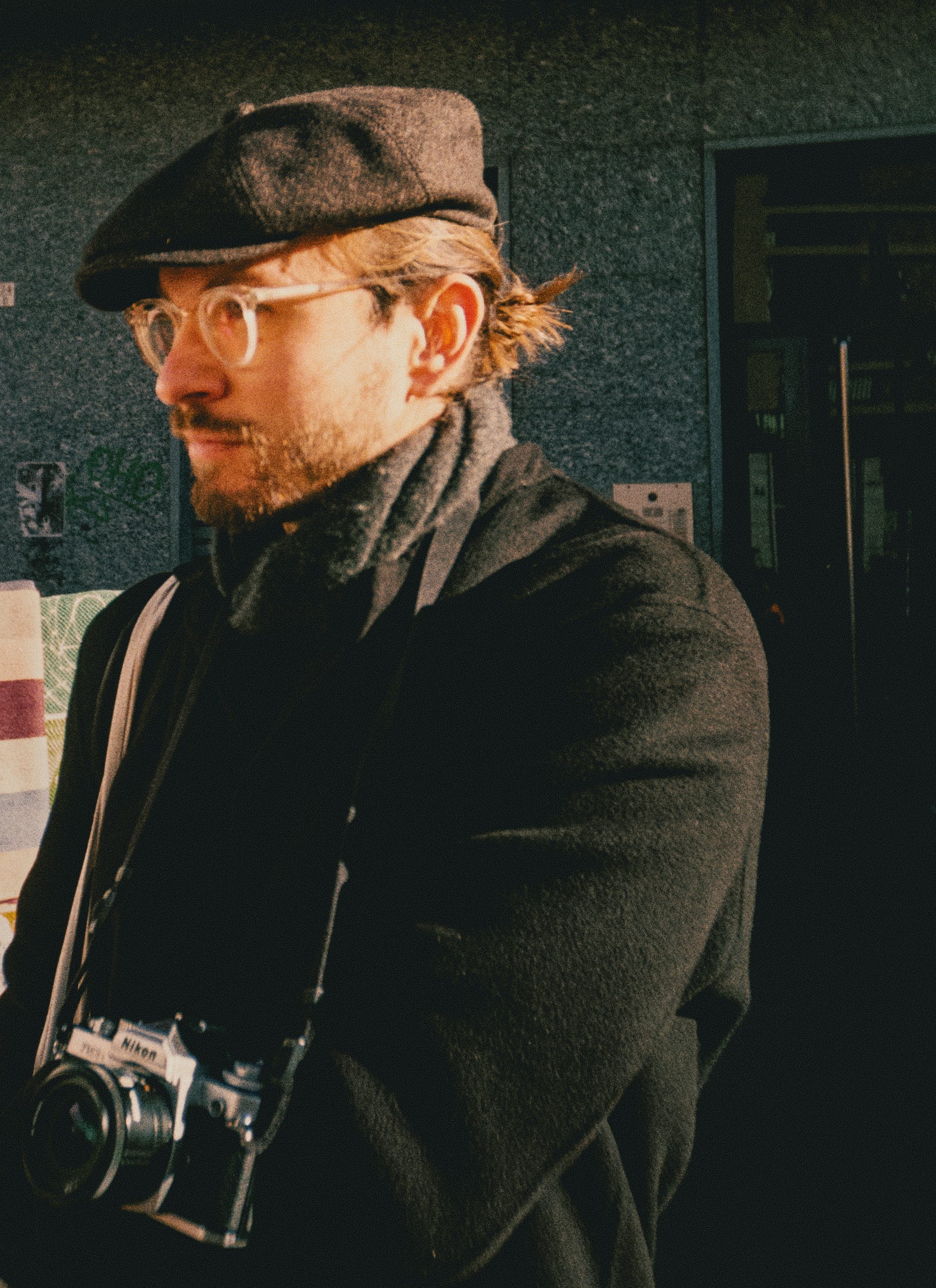
From here, the work shifts toward something more visual, more aesthetic, more rooted in this place. If you want the toolkit that gave me the freedom to make this shift—the practical infrastructure for building a guidance business that doesn’t consume your life—this is your last week. After this, it becomes part of the archive, and I move on to whatever comes next. Which I still can’t fully name. But I’m learning to be okay with that.
Beautiful Nik, thanks for the good read. Deeply resonates with my own journey over the past couple of years. Finding my way back to something that feels true to me and nobody else. Your course played a huge part in that. Not because it suddenly answered questions I hadn't already asked myself before, but because it gave me perspective and clarity on the fact that I can indeed make this work out. And that's a whole lot, isn't it?
Excited to hear more about your continuous journey.
Loved reading this brother. Here for your journey no matter where it takes you, and I applaud your courage for going against the grain and following something that only feels true to YOU! 🩵