

Nomad’s Land
I spent thirty-one years moving countries until leaving stopped working.

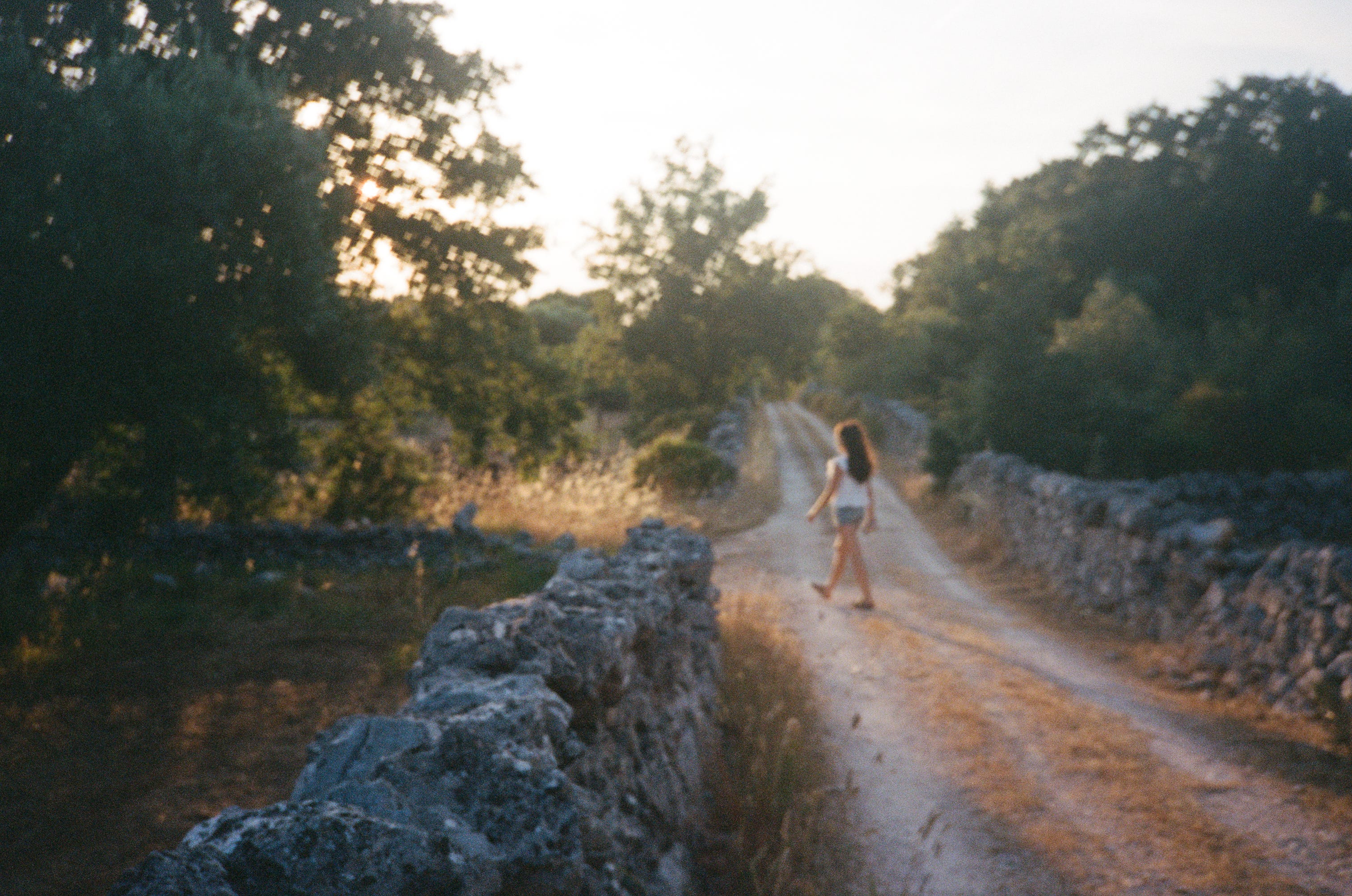
“So? Did you decide? Do you plan to stay here?”
Gianni asks me in Italian while Rossana puts the eggs in a brown paper bag. “We’re trying it out,” I tell them. The truth is I don’t know where to settle, and I’ve spent the winter trying to work out why, while buying eggs from a man who doesn’t even think about moving.
We’d been in Puglia, southern Italy, for two months when I joined local WhatsApp groups and noticed messages from locals selling eggs. I found Gianni through a picture with three chickens and a dark grey cat next to them that made me smile. His number started with +43 instead of the Italian +39. An Austrian number, as I found out. The WhatsApp status also caught my attention: “it’s nice to be nice”, written in English. So I texted him.
Next morning, I drive up to the pin he sent me just outside two iron gates. A few minutes later, he pulls up in an old Fiat pickup that looks like it has been repaired more times than washed. Meanwhile I’m sat in our Toyota, almost new, not a scratch. Noticing the contrast I wonder if Gianni does too.
As he opens the door and slowly steps out of the car, I approach to greet him. His eyes are lively and I immediately notice his ginger beard, which seems rare down here. We speak Italian, at least at first, his fluent, and mine still limited, so we switch to English soon enough. His father is from here, his mother from Austria.
I understand. I’m half-everything.
He hands me a paper bag with twelve eggs and immediately mentions two have tiny cracks. “It’s fine,” I tell him. It’s six euros but I only have a tenner so we count it towards next time. There will be a next time, because I’m curious to get to know him and learn about his life.
We linger for a little longer, standing and chatting with occasional silence. He manages his father’s vegetable garden and has his own plot of olives and almonds closer to the sea. “I sell them in Austria, I get a better price. You know, money is not easy to come by.” He pauses after saying it and looks me directly in the eyes.
My mind starts doing the maths I don’t want to do. What I earn in a morning on my laptop. What the blinking Starlink router with 200 Mbps speed in the four-hundred-year-old stone trullo costs me per month. What his twelve eggs cost him in feed, patience, time and the drive to this junction. Six euros. For him, they matter. I tell him I’d come by sometime and help on the land. I’m getting into the idea of growing my own food, and I think I mean it.
We shake hands and as I drive off, I turn on Paul Kingsnorth’s audiobook “Against the Machine” through the car speakers. A book about severance from land and seasons and the old ways. There I am absorbing it through Bluetooth in a Toyota on a provincial road, having just paid six euros to a man who lives the life Kingsnorth mourns the loss of.
I was born in Stockholm in 1994. Left at three to live in Moscow. Then Helsinki until ten. Again back to Moscow. Brussels from fifteen to twenty-one. Finally London for most of my twenties until I became nomadic.
I left Stockholm too young to have any memories. But I went back many times as a tourist to my own birthplace. I always feel charmed by the red wooden houses standing in the water. The smell of buttery cinnamon buns when I walk by a cafe gives a vague feeling of familiarity. I sense a light vertigo when I’m there — being a stranger in a place where my life began.
Moscow was colder in my memory, and not only in temperature. I spoke the language and still felt foreign in it. Fluent and unbelonging at once.
Brussels was where I first fell in love. There’s a bench in Parc du Cinquantenaire I still can’t walk past without the old feeling rising, especially when the leaves go yellow in September.
I lived in five countries before I was twenty-one. There’s a name for children raised between countries by parents from elsewhere. Third culture kids. We learn to read any room and root in none of them. I got excellent at surfaces, and at leaving.
By the time I was old enough to choose, the pattern was already in my muscle memory. Learn the place, learn a bit of the language, make some friends, leave. Start again.
When I began working in a corporate office in London, my feet already itched. There was no window near my desk, so whenever a wedge of sun made it down between the buildings in grey winter I’d go out and stand in it on the pavement like a houseplant. Two weeks was the most holiday they’d give me. I spent them as far away as the days would stretch in Indonesia, Sri Lanka, India. The travellers I met there had been moving for years. Some couldn’t even count how many years it had been. I dreamed of being a forever nomad.
After I quit my job, my relationship ended and I left our flat. There was nothing to come back to anymore. So in early 2021 I set off with my backpack. Costa Rica for three months. Peru. Mexico. Back to London for a little while. Belgium. The Canaries of Spain, where I met Chiara, my fiancée. Nepal. India until the visa ran out. Sri Lanka, where we started to feel homesick for a home we didn’t have. Portugal, where we found friends but left because we also found mould. Mexico again. Madrid. Sicily. Catalonia. Lisbon to pick up our stored belongings and give most of them away, again. Puglia, where I write this now.
I could have settled anywhere. But I kept choosing the next place over the current one. Perfecting the art of arriving and avoiding the cost of staying. Every place had a reason to leave. The mould, the heat, the visa, the boredom. Some of them real but most convenient.
The Jungian analyst Marie-Louise von Franz called it the provisional life. Every situation treated as temporary, real life is always about to begin somewhere else, after the next move. The “puer aeternus”, the eternal youth who floats above commitment, because commitment means the death of possibility. I didn’t have the word then. I just had another flight booking and the idealised image in my mind of the next place.
It always began as romance. The right light, the sea at the right distance, a version of myself who might finally settle there. Then within weeks the romance would start to curdle into a list of complaints. Too humid. Too touristy. Too far from anywhere interesting. After a while, I began to wonder whether the place was ever the problem. I was addicted to the searching and never finding, and some part of me made sure the finding always fell short, so the searching could start again. Maybe the perfect place doesn’t exist. Maybe I’d been chasing a feeling and blaming it on geography.
There’s a price for living this way. I rented short-term, which cost more, and owned nothing anywhere, because owning asks you to know where you would be, and I never knew. The other cost was physical. Our bodies wore down from the constant change. New diet, new water, new bed, every few weeks. The not-choosing was a choice, and I paid for it every month for years. But there was an even deeper cost, which I’ll get to later.
Burned out and still not knowing, we landed in Puglia. Our longest stretch, six months in one home. Weeks after moving in, we got two kittens. I felt the resistance rise. What if we have to move again? What if this wasn’t the right place? At the same time, I was more tired of moving than ever before. I committed to the kittens.
Getting those kittens was my way to engineer an anchor against my own flight instinct. It worked. For now, at least.
Nomading has a darker side, and I’ve lived it. There’s a word for what I’ve been. An extractionist.
The nomad, at worst, arrives at a place, takes advantage of the exchange rate, eats the food, photographs the beauty, learns twenty phrases, and leaves before the first real bill comes. I’ve done all of this.
Even the word is generous. The Tuareg cross the Sahara using ancestral knowledge of wells and pastures built over centuries; their movement is cyclical and rooted. Mine was chasing summers all year round, swayed by a cinematic reel of a place on Instagram. The Tuareg knew every water source to the horizon. I knew the WiFi password, and even that I would often forget. We invented something with no precedent and gave it a prettier name than it deserved. The digital nomad.
The version I lived most often looked nothing like the Tuareg. I flew somewhere cheap, locked myself in a flat with takeaway in plastic, opened my laptop, and lived the same life I’d lived in London, only warmer, and cheaper. It was sold to us as counterculture. In reality, it is just another luxury product. We consume geography instead of objects.
And the places pay for it. In Lisbon, rents rose thirty-seven per cent the year after the nomad visa launched; in the Mexico City neighbourhood where I stayed once, landlords stopped renting to locals at all. I played my part in this gentrification too.
Underneath the content was a real business, helping people build a presence online, the one skill I actually have. I made content about the lifestyle too. A thread about travelling through India got seven million views; an Indian paper called me a “Portuguese entrepreneur”, only because Portugal was the next country I passed through and made it into my bio. A month later I wrote a thread selling the cure. “I run a six-figure business from mountaintops. Zero burnout.” I believed it enough to charge for it. Mostly I was selling it to myself.
I can’t count how many times I fed twenty-plus criteria into an AI and asked it to rank Mediterranean towns by water supply, sunshine, “community”, distance to the sea; running the same prompt across four models, deploying the most advanced technology on earth to find the place where I’d finally disconnect from technology.
It was freedom, of a kind. The kind that never asks you to fix the plumbing or learn the name of the disease killing your neighbour’s crop. All winter I’d been listening to Kingsnorth, and he gave me the word for it. The Machine. The long modern drive to pull people loose from the things that hold them still, land, neighbours, a place that knows their name. The Machine prefers you unrooted, because a rooted person is hard to move and hard to sell to. Give someone no field to defend and no neighbour they owe, and they’ll go wherever the work and the WiFi are, and buy whatever dulls the not-belonging. That person is the point. That person is me.
A person with no attachment to land, no loyalty to a local economy, no memory tied to a specific tree. The digital nomad.
Travel did crack me open. I can’t pretend otherwise.
In Sri Lanka I watched people live in ways I didn’t know were possible. In India something shifted I couldn’t name but felt in the body. I went back to London, took months of medical leave, then dragged myself to the desk, half-dead, and quit. Whatever I am now, I’m not the man in the Bloomberg suit that never quite fit. Travel did that.
It also gave me the chance to see the world through my own eyes instead of the scary stories. I arrived in Mexico half-expecting the country the headlines had sold me. Then a taxi driver named Carlos, who picked us up one afternoon in San Cristóbal de Las Casas when no cabs were waiting, kept showing up whenever we called. He warned us off the tourist curanderas, introduced us to his father, invited us home for a meal. A place stops being a story other people told you and becomes a thing you’ve touched. And everywhere I went I found the other travellers, the ones who’d also left and never fit where they came from. For someone who’d been a foreigner in every country he’d lived in, the road was the first place the foreignness was shared. For a while, it felt like belonging.
I also met Chiara because I left. If I’d stayed in Brussels in that cold winter, I’d never have met her on a windblown island off the coast of Africa. No Canaries, no Chiara. No Chiara, no Puglia, no kittens, no six-euro eggs, no winter quiet enough to write this. Everything I’m now trying to put roots into, I reached only by leaving.
Hermann Hesse wrote a story that touched me deeply while I was on the road. Siddhartha had to leave home to understand what home was. The wandering is what makes the arriving mean anything. My years of leaving might be the very thing that could make staying matter. Without them I’d be a man who never went, which is a different thing from a man who chose to stop. You can only choose a place once you’ve known others, once you’ve felt the pull of elsewhere and stayed anyway.
Travel taught me many things. It just never taught me the one thing I’d need to keep any of it. How to stay.
By spring I’d been back at Gianni and Rossana’s for eggs many times, Chiara too. Each visit went a little deeper.
Once, over tea at their place, I mention we might go to Greece for a few weeks. Rossana’s eyes light up. She’s been dreaming of travelling there. Gianni just points at the ground outside. “Sono di qua,” he says. I’m from here. “Why would I go somewhere else?”
Next time I’m back, he asks me, “You said you work with social media, right?” The Xylella disease has been killing the olive trees across Puglia, the ancient ones hollowed out and dead, and he is convinced the official story isn’t the whole picture. He wants to build a page, raise awareness. “Maybe you could help?” he wonders.
This is the work I do, making people and ideas legible to strangers, exactly what he is asking for. But that day the weight drops into my stomach. I hear myself offer high-level advice without any commitment to do any work; I am burnt out from my own content, which is true and also a door I am backing through. Saying yes feels heavy. Saying no feels too hard. I leave it hanging. Something in his face dims. Not much, as he’s too kind to let it show. “Va bene,” he says. It’s okay. I ask questions about the disease I don’t need answered, my eyes on the fireplace, then say I have somewhere to be, and leave.
So? Did you decide? Do you plan to stay here?
Eggs have a season. I didn’t know this until we came to Portugal, the year before. Neighbours with chickens wouldn’t sell eggs in winter. “Not now. Too cold for them. It’s not the season.” Chickens rest in winter. The supply stops because the body needs to stop.
When you chase summer across countries, you skip the season when everything goes quiet. You never see what happens when a place goes dormant. We’d chased the summer for years. This past winter, for the first time, we both wanted the cold. The dark. The nothing. The cosy reading session next to a fireplace, with a cup of warm herbal tea and an actual book in our hands. As if we’d been skipping something the body insists on.
I’d had freedom from everything, the office, the lease, the boss, and used it to escape the freedom to build something. Staying is the difficulty you don’t leave. The summer the water runs out. Gianni asking for help and you actually showing up. Nobody photographs their maintenance. There’s no dopamine in it, which is exactly why I never learned it. Staying is a skill, and I’d only ever practised arriving. Choosing the perfect Airbnb, finding the one cafe doing flat whites at four times the local price, putting pins on the neighbourhood map, taking aesthetic pictures and soon enough boarding another plane somewhere else.
This winter I bought a drill, my first, and hung a mirror from a local antique market and a slightly crooked curtain rail, and felt something no viral thread had ever given me. I’d built an audience, a brand, a business that ran from anywhere, and never made a single thing I could touch. During the nomad years the only key I owned opened a storage unit in London; everything else was a code texted to my phone. Now my keyring is heavy, the house, the car, the woodshed, the gate, the water pump. I used to pride myself on travelling light. Now I’m starting to think belonging is mostly weight you’ve agreed to carry.
Money buys almost everything now. The eggs, the house, the Starlink, the view down the valley. But belonging is the last feeling without a checkout button. It only grows slowly, the way seeds do, and only if you leave it alone long enough. I kept digging them up and moving them around. I’d built a life with no winter, and nothing in it had roots, because roots are what grow when something is made to stay still in the dark and wait.
Some of what I called wanderlust was a flight response that learned to book flights. The nervous system that couldn’t sit inside a hard feeling found it could always sit inside a departure lounge on the high of another adventure. Movement can be courage. It can also be the most sophisticated avoidance I know.
What I know now is simpler than any philosophy.
I’m tired.
A tiredness that settled in the body, a gut that stopped working and a low static anxiety I couldn’t place. The pitch sold to me as freedom had become a tax I paid with my body. Once settled, I started to wake up feeling rested. Not needing to book the next accommodation felt like a deep sigh of relief. I hadn’t known how much the moving cost me until I stopped paying it.
The deeper bill came due in friendships. So many of mine have thinned over the years. Friends I let drift, friends who let me, relationships that shrank to a text thread, then a birthday message, then a like on a photo, then a name I’d see and feel a slight ache about. We hadn’t been in the same room in so long that talking online only made the distance louder.
One friend was another half-everything, like me, who I’d see whenever I passed through Brussels, until I stopped passing through. I only knew he was gone when a message wouldn’t deliver: he’d changed his number, moved to Senegal, and I found out by email, months late.
The first real test came in December. We were driving back from the airport after Christmas in Belgium when the owner of our house in Puglia called. The power had tripped. We went in with a head torch and found every switch up and nothing working, no heat, no signal, no one to tell us what was wrong. We built a fire from green wood that barely caught, dragged the mattresses next to it, ate the focaccia and ricotta we’d bought on the drive. I filmed a little of it, narrating it like an adventure, which is what I do when I’m frightened, aestheticising my own life as a way to dissociate. I told Chiara it would make a good story. Quietly I was running the other script. Wrong house, wrong region, an Airbnb somewhere easier while we worked out where to actually live. The next morning a woman named Rita walked to the gate and flipped a switch on the outside wall. That was all it had been.
But through January the power kept tripping and the leaving voice kept getting louder. By March I was building an HTML map of communities in Greece, colour-coded, printed, circled in pen, the same software I’d used to rank places to arrive in, now ranking places to escape to. Then I looked at the ferry, the packing, the months in another temporary house, someone to mind the kittens, and the whole thing went heavy in my hands.
We didn’t decide to stay so much as get too tired to leave. There’s nothing triumphant about it. It’s simply the first time I didn’t reach for the door.
The morning after I first bought Gianni’s eggs, I cracked two into the pan.
The whites were thick; the yolk was deep, almost reddish, the colour of a blood orange. Scrambled on sourdough bread, the taste was something I still can’t describe except that it tasted the way yolk is supposed to taste, as if everything before it had been a diluted version of the egg.
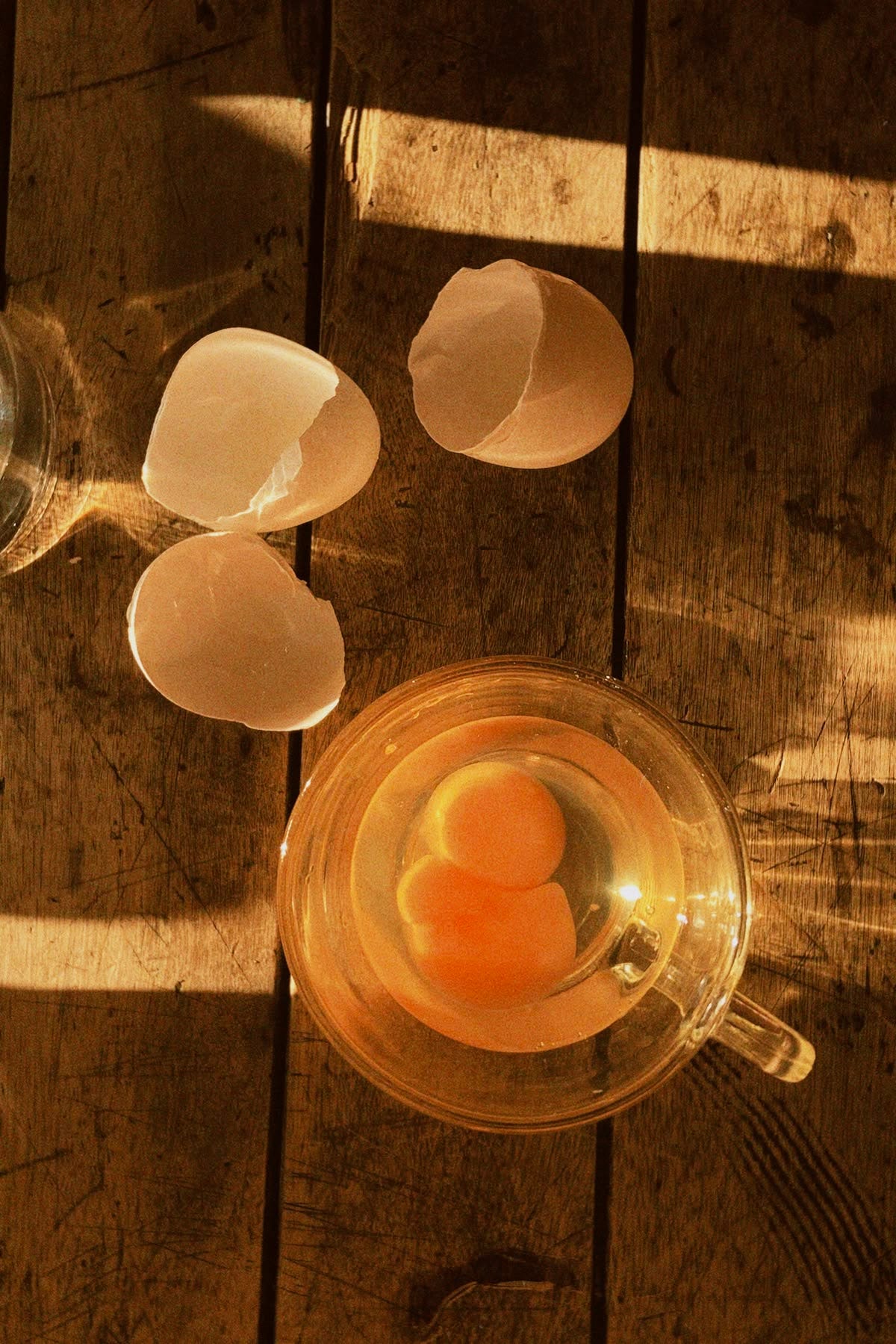
You can’t get these eggs in London, or Mexico City or Porto. You can’t order them. The yolk is that colour because the hens eat what grows in this particular soil, on a particular man’s land. I’ve stood on it now, the valley of olive trees, the hens loose in the high grass, the grey cat asleep among them. Gianni and Rossana don’t even eat many eggs; they raise the hens, love them, and sell me what they won’t take themselves. Six euros. The cheapest and least replaceable thing I’ve consumed in years of consuming places. You only get an egg like that from someone who stayed in one place long enough to make it.
Gianni doesn’t decide whether to tend the olive trees. He just goes. The trees became his, and somewhere in there, he became theirs. I can’t manufacture that. But belonging doesn’t arrive all at once. What worked for me was small. Getting the kittens before I’d decided to run. Going back to the same eggs from the same man on the same land. Tiny, repeated acts of attention that look like nothing from the outside but feel, from the inside, like the beginning of a root.
“So? Did you decide? Do you plan to stay here?” they ask me again.
I don’t know. Non sappiamo ancora. We don’t know yet. We’ll see. I’ve started to hear how tired I am of saying it, of being the man who still can’t answer.
I’m a foreigner in Puglia. In London. In Brussels where I grew up. In Russia, where my parents are from. Everywhere I go, people assume I’m from somewhere else. On the surface, what scares me is committing, buying land, building my life in one place, and finding I chose wrong. Underneath, the fear goes deeper. That I stay and still don’t belong. That the foreignness is inside me and I can never escape it. That I could live here for a decade and still be the guy in the Toyota buying eggs from the man who belongs.
And yet. At an event in the spring, the American host split us into teams for a volleyball game, “locals” against “non-locals”. The non-locals were two men from Salento, two hours down the coast, and a Frenchman over from Spain. The locals were Gianni, the American host himself, who lives between Puglia and Costa Rica, and me. By the only measure that counted that afternoon, who lived nearby, I was a local. It meant nothing and I knew it. I was absurdly pleased anyway. For once I’d been sorted into a place instead of out of it.
I don’t know if I’ll ever fully arrive. But I notice things I wouldn’t have at month one. The sun comes into the kitchen at a different angle now. I know which neighbour prunes his olive trees on sunny afternoons in autumn. I know the taste of eggs from a half-Pugliese half-Austrian man a nine-minute drive away.
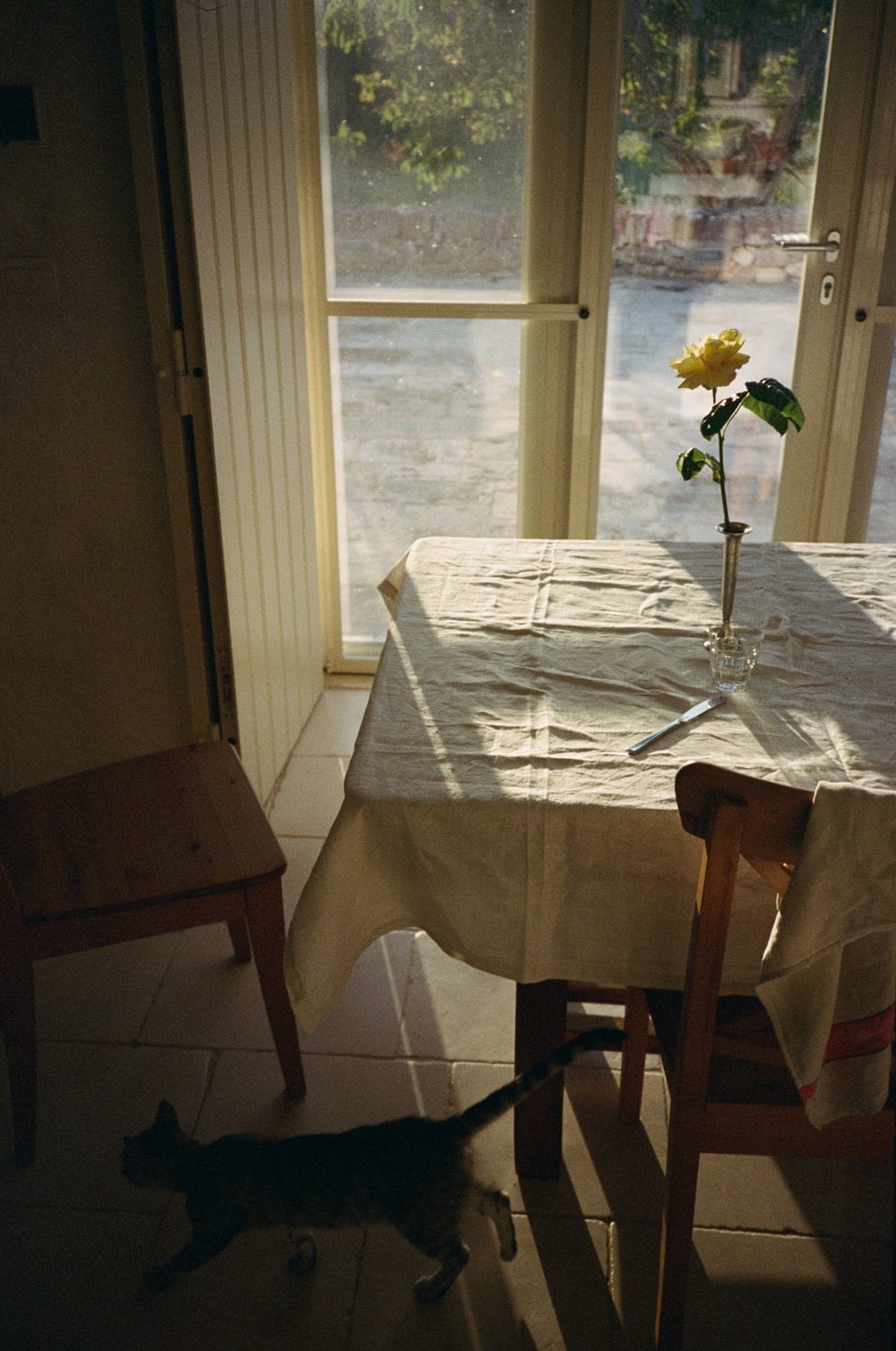
It might be the beginning of the skill of staying, something the body learns before the mind agrees. Like the kittens, Ayla and Lumi, who we got before I’d decided to stay, who sleep on the bed and who I can’t leave without arranging someone to feed them. That small, stupid obligation is the most rooted thing in my life right now.
Gianni will text when he has more eggs. I won’t go just for the eggs. I’ll go to see how the olive trees are doing, to find out if the tractor got fixed.
To stay there when nothing interesting is happening.
Third-culture kid here too. I think it’s a way to force us to find our home from deep within.
Beautiful piece, enjoyed it very much. I'm British but have never felt like I truly belong here in the UK. Spent the past 3-4 years living between South Africa and Greece trying to feel into where is the right place. The chasing sun and interrupting the natural rhythms that the body needs resonated a lot.